Before anyone could snap or study, or even place Megalodon teeth on a shelf, it was performing something much less peaceful. It was among the largest predatory sharks that have ever been found in the oceans of Earth. The tooth slid out. That would mean the end for a lot of objects. It could also be the start of a tale for a fossil.
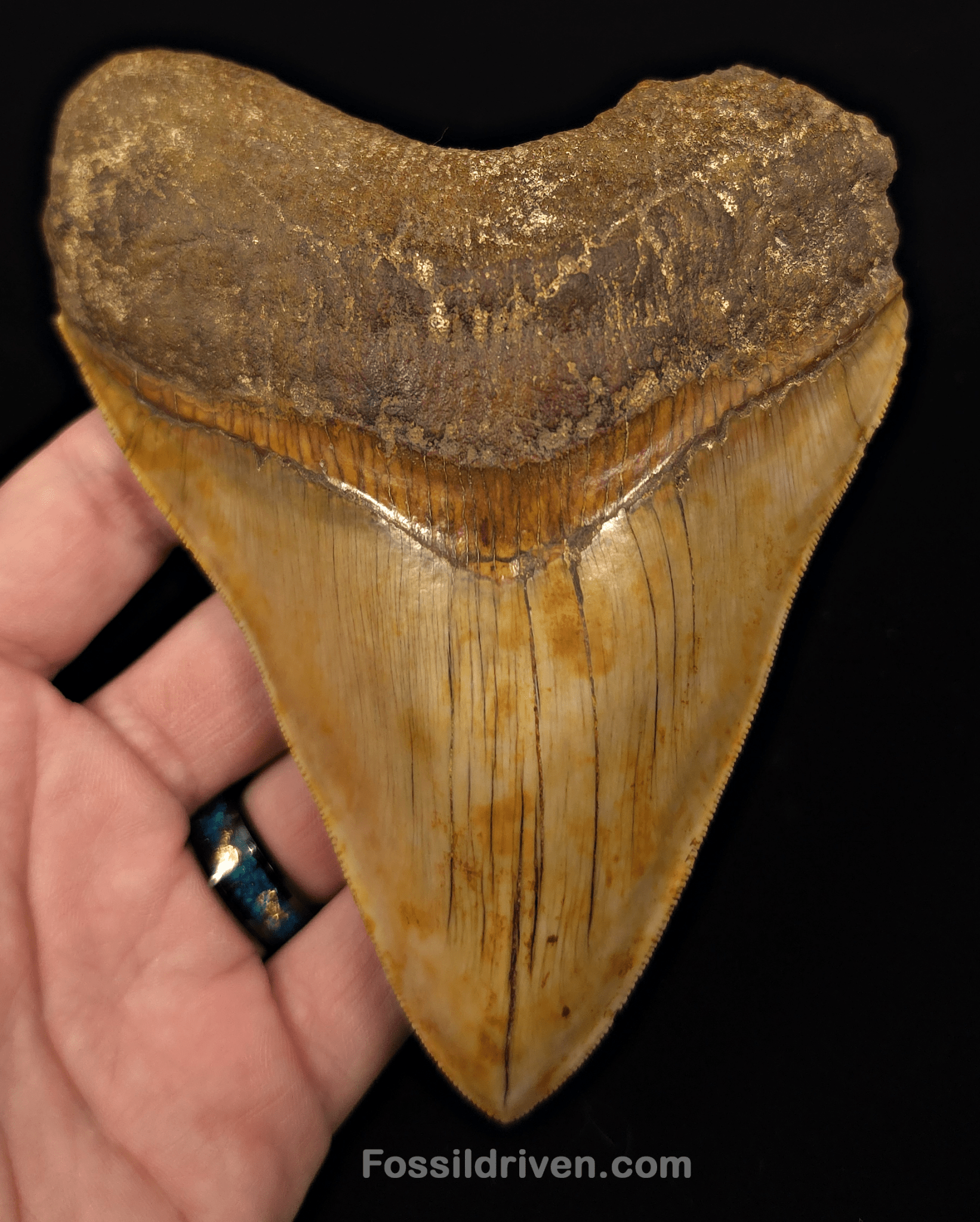
Image credit: fossildriven.com
The specimens offered by Fossil Driven have traveled through a geological process measured not in years or centuries, but in millions of years. The experience of seeing the fossil changes when you know the story behind it. The viewer is no longer gazing at a fascinating object. You’re viewing physical evidence from an era long gone.
The First Station: An Ancient Ocean
Megalodon’s teeth are taken from West Java in Indonesia. At around 20 million years ago the areas of dry land are now in our view were warm marine habitats. Megalodons, as well as numerous other marine species, inhabited the seas of prehistoric times.
Megalodon also produced and shed teeth in a manner similar like modern sharks. Some of those teeth eventually settled into sediments from the sea. If the conditions are right burial can protect them enough time to allow fossilization.
Then, Geology came in.
The next chapter was incredibly slowly. Sediments accumulated. Minerals react with the material that was buried. Geological forces altered landscapes and submerged landscapes transformed into land. The processes behind the color differences in fossil teeth are what consumers are able to see when they browse Megalodon tooth specimens for sale.
Indonesian specimens found in West Java’s Miocene Bentang Formation can appear with shades of gold or tan, as well as brown or red. Blue, blue, and. They can also display several shades in one tooth. The mineral conditions surrounding a specimen could affect the shade of a tooth after a long burial. It is impossible to produce the final product in large quantities through natural processes. Each fossil has been through an evolution in geology.
Discovery Begins A New Chapter
A fossil that was buried for many millions of years is recovered. The identification and documentation of fossils are becoming vital.
Megalodon collectors are looking through authentic teeth for sale, their focus is not just on appearance. Details about the locality, geological age, preservation, repairs, and restoration help to explain what they’re really looking at.
Natural wear doesn’t erase the past of a fossil. It’s possible that a worn-out tip or imperfect root, as well as an insufficient serration, are all part of the specimen’s past. The most important thing is describing the condition of the specimen accurately.
Fossil Driven has more than 13 years of fossil identification experience in this process. They also work with well-known fossil hunters and suppliers. When possible, specimens are described and analyzed with all the relevant details.
The Fossil will reach out to touch someone’s hands.
Real Fossils are purchased for many different reasons. Some people build a carefully organized collection. Others prefer a single, dramatic conversation piece. A child who is fascinated by prehistoric creatures could get their first real fossil, which sparks a lifelong passion for paleontology.
Megalodon’s teeth are only one method to enter the world. Trilobites, Dinosaur molars and ammonites are just a few of the numerous fossils that are a part of Earth’s ancient past.
The greatest thing about knowing that this is authentic
A replica can reproduce the basic shape of a prehistoric tooth. It is not able to recreate its history. The original Megalodon tooth was part of an ancient animal, was able to enter an environment totally different from the one we know today and remained in place through geological changes. and was buried for many millions of years, and then was finally discovered.
It is for this reason that authenticity is essential. A fossil is an actual reminder of a trip that has been almost impossible to imagine. Its latest stop is the display case.

Your First Real Fossil: What to Know Before Choosing a Specimen
Before anyone could snap or study, or even place Megalodon teeth on a shelf, it was performing something much less peaceful. It was among the largest predatory sharks that have ever been found in the oceans of Earth. The tooth slid out. That would mean the end for a lot of objects. It could also be the start of a tale for a fossil.
Image credit: fossildriven.com
The specimens offered by Fossil Driven have traveled through a geological process measured not in years or centuries, but in millions of years. The experience of seeing the fossil changes when you know the story behind it. The viewer is no longer gazing at a fascinating object. You’re viewing physical evidence from an era long gone.
The First Station: An Ancient Ocean
Megalodon’s teeth are taken from West Java in Indonesia. At around 20 million years ago the areas of dry land are now in our view were warm marine habitats. Megalodons, as well as numerous other marine species, inhabited the seas of prehistoric times.
Megalodon also produced and shed teeth in a manner similar like modern sharks. Some of those teeth eventually settled into sediments from the sea. If the conditions are right burial can protect them enough time to allow fossilization.
Then, Geology came in.
The next chapter was incredibly slowly. Sediments accumulated. Minerals react with the material that was buried. Geological forces altered landscapes and submerged landscapes transformed into land. The processes behind the color differences in fossil teeth are what consumers are able to see when they browse Megalodon tooth specimens for sale.
Indonesian specimens found in West Java’s Miocene Bentang Formation can appear with shades of gold or tan, as well as brown or red. Blue, blue, and. They can also display several shades in one tooth. The mineral conditions surrounding a specimen could affect the shade of a tooth after a long burial. It is impossible to produce the final product in large quantities through natural processes. Each fossil has been through an evolution in geology.
Discovery Begins A New Chapter
A fossil that was buried for many millions of years is recovered. The identification and documentation of fossils are becoming vital.
Megalodon collectors are looking through authentic teeth for sale, their focus is not just on appearance. Details about the locality, geological age, preservation, repairs, and restoration help to explain what they’re really looking at.
Natural wear doesn’t erase the past of a fossil. It’s possible that a worn-out tip or imperfect root, as well as an insufficient serration, are all part of the specimen’s past. The most important thing is describing the condition of the specimen accurately.
Fossil Driven has more than 13 years of fossil identification experience in this process. They also work with well-known fossil hunters and suppliers. When possible, specimens are described and analyzed with all the relevant details.
The Fossil will reach out to touch someone’s hands.
Real Fossils are purchased for many different reasons. Some people build a carefully organized collection. Others prefer a single, dramatic conversation piece. A child who is fascinated by prehistoric creatures could get their first real fossil, which sparks a lifelong passion for paleontology.
Megalodon’s teeth are only one method to enter the world. Trilobites, Dinosaur molars and ammonites are just a few of the numerous fossils that are a part of Earth’s ancient past.
The greatest thing about knowing that this is authentic
A replica can reproduce the basic shape of a prehistoric tooth. It is not able to recreate its history. The original Megalodon tooth was part of an ancient animal, was able to enter an environment totally different from the one we know today and remained in place through geological changes. and was buried for many millions of years, and then was finally discovered.
It is for this reason that authenticity is essential. A fossil is an actual reminder of a trip that has been almost impossible to imagine. Its latest stop is the display case.
Featured News
Category