
Police paperwork sometimes summarises hours of activity in only a few pages. A charging document may name the accusation in only a few words.
The events themselves are seldom so neatly organised.
Dinner may start at seven, a disagreement may arise at nine, and a person may leave at ten before returning ahead of a late-night call to police. A separate evening might involve a driver meeting friends, getting behind the wheel, being stopped, taking roadside tests and a preliminary breath test, and then being arrested. Hours of decisions and interactions may ultimately be recorded as one accusation.
For criminal defense lawyers in Grand Rapids, Michigan, reconstructing that sequence can be an important part of understanding a case.
The Story May Start Long Before an Arrest
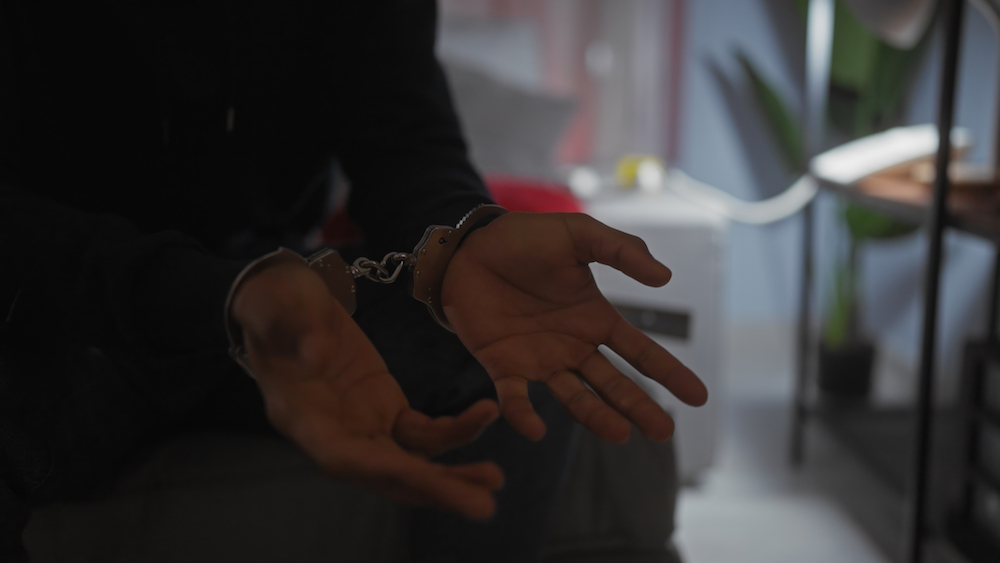
The arrest or first police contact may dominate someone’s memory, whether it involved handcuffs, flashing lights, or an unexpected call. Understanding the encounter, however, may require looking further back.
Michigan domestic violence law makes the relationship between the people involved legally significant. The firm’s materials identify spouses and former spouses, people who share a child, current or former dating partners, and people who live or once lived together.
Events preceding the call to police can be useful in establish context. Was a disagreement already underway? Who was present, and when did the interaction begin? Was there a departure and return, or any communication before and afterward?
These questions are not about inventing an alternative account. They may assist domestic violence defense lawyers in Grand Rapids, Michigan, in understanding how events unfolded before officers became involved.
The specific charge is important as well. As the firm’s information explains, domestic violence charges vary under Michigan law, and earlier convictions can affect the level of a later allegation.
An OWI Investigation Unfolds in Stages
An OWI encounter can be brief, but it still contains several distinct stages. The timeline can include driving conduct, the basis for the stop, observations after contact, roadside exercises, statements, testing, and the eventual arrest. Each stage serves a different purpose, which can be lost in a compressed account.
Operating While Intoxicated, commonly shortened to OWI, is the Michigan offence addressed by MCL 257.625. According to the practice, a roadside preliminary breath test (PBT) is used for screening and may help establish probable cause, but is not admissible at trial to prove intoxication.
That distinction is one reason drunk driving defense lawyers in Grand Rapids, Michigan may reconstruct the stop instead of focusing exclusively on one number a driver remembers from the roadside.
Digital Messages May Help Establish the Sequence
Not all investigations start with an officer seeing the alleged event.
Sexual-offence allegations can concern earlier events in a dating relationship, family setting, or workplace interaction. According to the firm’s information, a person can become aware of an investigation without first being arrested.
The chronology may then be distributed across several sources. Messages can show when people communicated; digital records may clarify the order of events; and participants’ statements may describe the same period differently.
No single message necessarily establishes whether an accusation is true or false. Instead, criminal sexual conduct defense lawyers in Grand Rapids, Michigan, may assess the connections among communications, witness accounts, credibility issues, and other information.
Memory and Documentation Are Not the Same Thing
After a stressful incident, people may recall particular moments without remembering the clock. Saying something happened ‘later that night’ is natural in conversation but may be too imprecise for a legal question.
Dates and times may be found in messages, phone records, photographs, receipts, legal paperwork, or other existing documents. Their significance will vary with the facts of the case.
Records should be preserved, not edited to improve appearances. A defence attorney can evaluate what may be significant and advise how that information should be handled.
The Full Sequence Matters More Than the Label
According to his professional information, Shawn Haff has practised criminal defence in Grand Rapids for over 16 years. The firm reports over 25 years of combined practice and more than 1,500 criminal matters handled. Its stated practice areas include OWI, domestic violence, assault, drug and weapons charges, sexual offences, retail fraud, expungements, and driver’s licence restoration.
A previous dismissal, acquittal, charge reduction, or favourable plea does not promise the same result in another matter.
Every case involves its own people, allegations, evidence, and sequence of events. That individuality is the reason chronology matters.
A criminal charge can be written briefly, even when the arrest happens quickly. But understanding the claimed offence often means taking the time to trace the night from beginning to end.