
Look at how much effort goes into designing a park that is public. Landscape architects look at access, circulation for pedestrians, drainage and vegetation, parking, lighting, playground layout, and how various groups will use the space. The most commonly used structures can often be thought of as a typical construction.
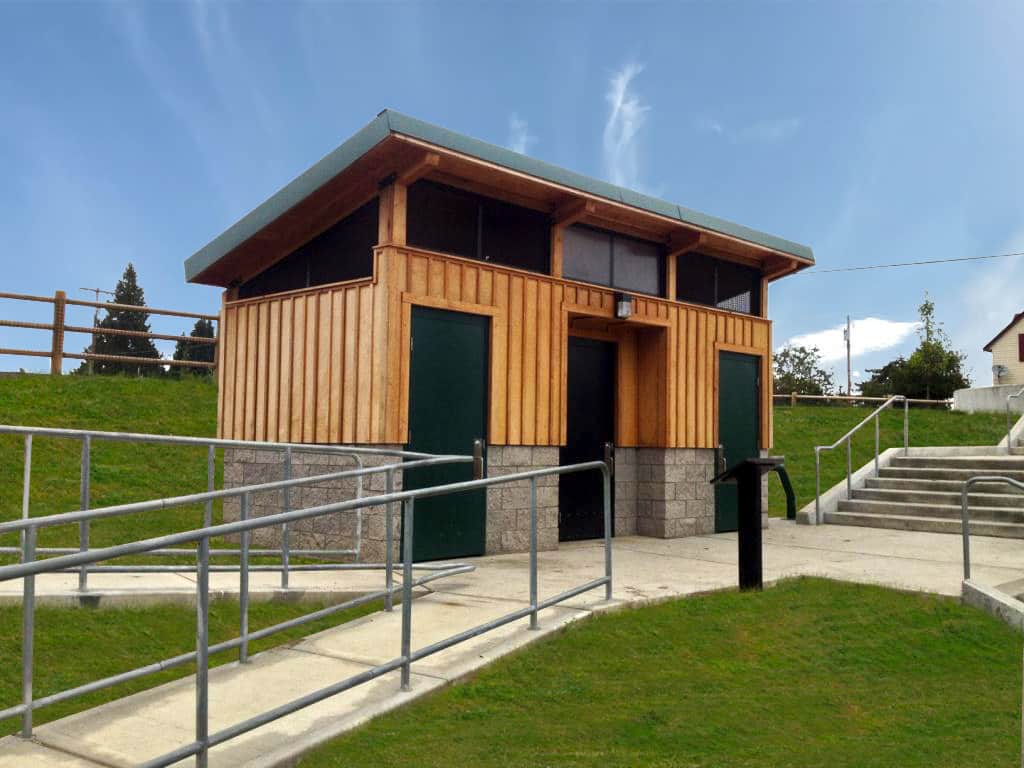
Image credit: romtec.com
A restroom deserves more consideration. There are plumbing and waste handling specifications, accessibility requirements as well as security, maintenance, and building code obligations. It also has to withstand the rigors of time and use by the public.
Romtec’s design approach makes bathroom design an integral part of overall design, and not as an afterthought.
Prefabricated Buildings don’t have to be identical
The term prefabricated park restroom buildings can suggest a limited selection of standard structures. A kit-based method can have various outcomes.
Romtec provides custom-designed plans, engineering documents, building materials and the documentation required to construct them. Landscape architects can use this to select the styles and materials suitable for the particular project while drawing on Romtec’s experience with codes, ADA requirements, components, pricing, and construction.
For example, a municipality which is rehabilitating an old park may have a different view of the exterior than a recreation department that is building the new sports facility. Both of them can benefit from a well-organized building supply process without making the architecture identical.
City Streets Create A Different Design Short
Toilets that are located in dense urban areas face unique operating difficulties. Restrooms in dense urban environments might be subject to constant pedestrian traffic, in addition to security concerns and vandalism. Additionally, they must be able to keep up with regular cleaning and address issues such as the lingering smell and cleanliness.
Romtec’s sidewalk toilets have been designed to be visible from the outside, allowing for a natural surveillance. They also keep the public bathroom. It is crucial to select materials that require little maintenance and are not susceptible to vandalism, since frequent repairs could create a massive cost to public agencies.
The goal of building a restroom is not to simply make it stronger. Layout, materials, and surrounding environment all contribute for making it easier to maintain.
The most important issue is the one that lies beneath.
Before planning the design of a bathroom, planners should determine what infrastructure exists.
In a city park that is well-developed water, electricity, and sanitary sewers are easily connected. Move the same project to a remote campground or trailhead, and then extending these utilities may result in one of the largest costs.
If you’re in a good location, vault toilets can be a great alternative to water-based toilets. Romtec also offers components for these facilities, like its single-piece plastic toilet riser. The smooth and molded material is chemical-resistant and is easy to clean and designed to deter bacterial growth. It is able to be placed in existing or new vault restroom facilities.
Visitors who arrive late after closing should be accommodated in a manner that is welcoming.
Visitors are only able to use the restroom for a short duration. Maintenance personnel have lived with the design for years.
It’s the difference in perspectives that matters. Hard to clean surfaces parts that break easily, and materials that aren’t designed for repeat cleaning are just a few instances of tiny design choices that can become costly.
Durability, serviceability and cost are, therefore, important aspects to take into consideration in the design process. Energy-efficient and sustainable materials, eco-friendly systems, vandal-resistant fixtures, and efficient maintenance access could be a factor in the building’s longevity value.
The landscape can still include some small structures
The design of the restroom doesn’t have any need to be in competition with the park surrounding it, nor should it appear unintentional.
Romtec’s customized approach offers public agencies and design professionals an opportunity to coordinate restroom structures with shelters, pavilions and campgrounds. It also includes pools and trails as well as the surrounding architecture. The design must also satisfy practical requirements, such as ADA compliance as well as code compliance and sanitation.
If all these elements are taken into consideration what you get is not just a place that toilets can be put in. It’s a public infrastructure specifically designed for the community and the environment it serves.